Your Communitys Hidden Benefits The Policy Insights You Cant Afford to Ignore

webmaster

Here are two image prompts based on the provided text:

Have you ever walked through your neighborhood and just *felt* the difference – the well-maintained parks, the bustling local businesses, the sense of safety?

That’s not accidental; it’s the quiet handiwork of effective public policy and vibrant community development. I’ve personally witnessed how a seemingly small zoning change can either uplift a struggling main street or, conversely, unintentionally gentrify it out of existence, forcing long-time residents elsewhere.

It’s a delicate balance, and honestly, sometimes it feels like navigating a minefield. Right now, we’re at a fascinating crossroads. The rise of digital citizen engagement platforms, for instance, promises unparalleled transparency, yet I worry about digital divides leaving vulnerable groups behind.

And with climate change bearing down, how we design our urban spaces and allocate resources for resilience isn’t just an academic exercise; it’s about whether our kids will have a livable future.

I’ve seen towns grapple with this firsthand, debating everything from permeable pavements to renewable energy grids, and the passion is palpable. Looking ahead, imagine AI not just analyzing data, but helping us predict the social impact of new policies, or even decentralized autonomous organizations empowering local communities to directly fund and manage public services.

It sounds almost futuristic, but these concepts are already taking root, transforming how we think about governance. It’s truly exciting, but it also means we need to be more informed, more engaged, than ever before, because *we* are the community.

Understanding these dynamics isn’t just for politicians or urban planners; it’s for every single one of us who calls a community home. It’s about shaping the world we live in, one policy, one initiative at a time.

Let’s delve deeper into how these forces are shaping our daily lives and what the future holds.

The Unseen Architects: How Local Policy Truly Shapes Our Lives

your - 이미지 1

It’s easy to walk past a new bike lane or a revamped community center and just see the finished product. But what I’ve learned, often through frustratingly long community meetings and passionate debates, is that behind every seemingly minor public initiative lies a labyrinth of policy decisions. I distinctly recall a town struggling with a sudden influx of short-term rentals. On the surface, it seemed like a boon for tourism, bringing in outside money. Yet, I watched as long-time residents, essential workers like teachers and nurses, found themselves priced out of housing. The policy makers were caught between economic growth and preserving the town’s social fabric. It took months, countless stakeholder meetings, and a deeply emotional public hearing for the council to even *begin* to craft a balanced ordinance. My personal takeaway? These aren’t abstract concepts debated in ivory towers; they are direct interventions in our daily existence, influencing everything from the cost of your morning coffee to whether your kids can afford to live in the town they grew up in.

1. The Ripple Effect of Zoning and Land Use Decisions

When we talk about zoning, it often sounds like dry, bureaucratic jargon. But from my vantage point, having observed numerous local planning commissions, these decisions are profoundly human. I’ve seen communities literally transform – sometimes for the better, sometimes in ways that leave residents feeling alienated – purely because of a change in what can be built where. Think about it: a decision to allow multi-family dwellings in a previously single-family neighborhood can ease housing shortages, but it can also strain existing infrastructure like schools and roads. I remember a small, charming downtown where a new zoning overlay was introduced to encourage mixed-use development. Initially, it brought vibrant new businesses and apartments above storefronts, truly revitalizing the area. However, without careful planning for parking and public spaces, it eventually led to congestion and a loss of green space. It’s a constant tightrope walk between progress and preservation, and honestly, the nuances are often overlooked until it’s too late. The challenge isn’t just about drafting the rule, it’s about anticipating every possible human reaction and consequence, which, I can tell you from personal experience, is an almost impossible task but one that policy makers must constantly strive for.

2. Public Transit and Urban Connectivity: More Than Just Roads

Public transportation, or the lack thereof, is another area where policy dictates the rhythm of our lives. I once lived in a city where expanding the light rail system became a massive point of contention. Opponents focused solely on the immediate tax burden, while proponents painted a picture of reduced congestion and enhanced accessibility. What truly struck me, though, was the social equity aspect. For many low-income residents, reliable public transit isn’t a luxury; it’s the bridge to job opportunities, healthcare, and educational facilities. Without it, their world shrinks dramatically. I’ve volunteered with organizations that help individuals navigate these transit deserts, and the stories are heartbreaking. A 30-minute commute by car becomes a 2-hour odyssey by bus, involving multiple transfers, simply because policy hasn’t prioritized comprehensive, equitable transit networks. It fundamentally alters someone’s capacity to participate fully in society. When I see cities investing in truly interconnected systems – not just big highways, but bike lanes, pedestrian pathways, and efficient public transport – I don’t just see infrastructure; I see opportunities blooming for everyone, fostering greater social inclusion and economic mobility.

Digital Democracy: Bridging Gaps or Widening Divides?

The promise of digital citizen engagement tools has always captivated me. Imagine a world where every resident can easily provide feedback on new policies, track local government spending, or even vote on minor initiatives from their phone. I’ve dabbled with several of these platforms – from city-run apps to independent civic tech initiatives – and while the potential for unprecedented transparency and participation is undeniable, a persistent worry gnaws at me: are we inadvertently creating new barriers? My personal experience with community outreach, especially in diverse neighborhoods, has shown me that relying solely on digital channels can exclude significant portions of the population. Not everyone has reliable internet access, a smartphone, or the digital literacy to navigate complex online forms. It’s a conversation that needs to happen more frequently, openly and with true empathy, because if we’re not careful, we might just be replacing one form of exclusion with another, more insidious one.

1. The Promise of Online Civic Engagement Platforms

I’ve enthusiastically followed the evolution of platforms designed to connect citizens with their local governments. Tools like Neighborland, SeeClickFix, and even specialized city portals promise to democratize access to information and streamline communication. I remember thinking, during a particularly contentious debate over a new park development, how powerful it would be if every resident could easily submit their ideas and concerns online, rather than being limited by the capacity of a single public hearing. These platforms *can* reduce the friction of participation. They can make local government feel less like an inaccessible bureaucracy and more like a responsive entity. From reporting potholes to suggesting budget allocations, the sheer convenience can encourage engagement from people who might never attend a physical meeting due to work schedules, childcare, or mobility issues. I’ve personally seen city councilors genuinely surprised by the breadth of feedback they received through digital channels, opinions they might never have heard through traditional means. This immediate, direct line to decision-makers, when implemented thoughtfully, fosters a sense of ownership and accountability that is truly transformative for civic life.

2. Navigating the Digital Divide: Ensuring Equitable Access

However, the bright promise of digital engagement casts a long shadow: the digital divide. My direct work with community organizations has made this painfully clear. While many of us take ubiquitous internet access for granted, millions across the globe, and indeed within affluent nations, still lack reliable, affordable broadband. Beyond access, there’s also the crucial element of digital literacy. Can everyone confidently navigate government websites, understand complex policy documents presented online, or participate effectively in online discussions? I’ve seen firsthand how a well-intentioned online survey can completely miss the perspectives of seniors, low-income families, or non-English speakers simply because the digital pathway wasn’t inclusive. For digital democracy to truly flourish, policy must actively address these disparities. This means investing in public Wi-Fi, providing digital literacy training, offering multilingual online resources, and crucially, maintaining robust offline engagement channels. Because if we build the most sophisticated digital civic platform in the world, but only a segment of the population can use it, then we’re not building a more democratic society; we’re just creating a more efficient echo chamber for the digitally privileged.

Reshaping Urban Futures: Climate Change and Community Resilience

The conversations around climate change in local communities used to feel abstract, often relegated to scientific conferences or national policy debates. But I’ve personally seen that shift dramatically in recent years. It’s no longer about distant polar ice caps; it’s about the rising floodwaters creeping into basements, the intense heatwaves stressing vulnerable populations, and the unpredictable weather patterns impacting local agriculture. How our communities respond to these immediate and tangible threats isn’t just about environmentalism; it’s about survival and long-term livability. I’ve sat in countless workshops where residents grapple with tough choices: do we invest in expensive seawalls, or do we retreat from vulnerable coastlines? Do we prioritize green infrastructure like permeable pavements to manage stormwater, or stick to traditional, less effective concrete? The passion, fear, and determination in these rooms are palpable, as people recognize that the choices made today will profoundly shape the future for their children and grandchildren.

1. From Abstract Threat to Local Action: Building Climate Resilient Communities

My own journey into understanding community resilience really deepened when I started observing how local governments tackled the immediate aftermath of extreme weather events. I remember vividly the discussions in a town that had been hit by unprecedented flooding. The focus wasn’t on “if” another flood would happen, but “when,” and “how prepared would we be?” This shifted the policy conversation from mitigation (reducing emissions) to adaptation (living with the changes). I’ve seen innovative approaches, from establishing community-managed micro-grids powered by renewable energy to developing “cooling centers” in public libraries during heatwaves. It’s about designing neighborhoods that can absorb shocks, whether they’re climate-related or otherwise. This often involves thorny policy decisions: regulating development in floodplains, incentivizing green building practices, and even relocating critical infrastructure to higher ground. It’s not easy, and it often involves significant upfront costs, but the alternative—repeated disasters and economic devastation—is far more dire. These resilience strategies are fundamentally about protecting people and livelihoods, ensuring our towns remain viable and vibrant in the face of an unpredictable future.

2. The Green Infrastructure Revolution: Designing Sustainable Urban Spaces

One of the most exciting areas of policy I’ve witnessed unfold is the embrace of green infrastructure. Forget the concrete jungles of yesteryear; forward-thinking communities are incorporating nature into their very fabric. I remember visiting a revitalized urban park that wasn’t just pretty; it was a sophisticated stormwater management system, with rain gardens and permeable surfaces designed to absorb massive amounts of rainfall and prevent urban flooding. This wasn’t just a nice-to-have; it was a crucial piece of climate adaptation policy. Public policies encouraging “living roofs,” urban tree planting initiatives, and the conversion of paved areas into green spaces are not merely aesthetic improvements. They cool urban heat islands, improve air quality, create vital habitats, and crucially, manage stormwater runoff more effectively than traditional grey infrastructure. I’ve heard countless stories from residents whose homes were previously prone to flooding, only to find relief after their neighborhood invested in these nature-based solutions. It’s a powerful testament to how intelligent policy, when informed by ecological principles, can deliver tangible benefits directly to residents’ doorsteps, while simultaneously contributing to the larger fight against climate change. It’s about building cities that are not just smarter, but also healthier and more harmonious with the natural world.

The Economic Engine of Engagement: How Local Businesses Thrive

It’s a truth universally acknowledged, at least in my world, that a thriving local economy isn’t just about big corporations or national chains. It’s the small businesses, the independent coffee shops, the family-run hardware stores, and the quirky boutiques that give a neighborhood its unique flavor and resilience. I’ve personally seen how a targeted policy – like a facade improvement grant program or a simplified permitting process for new businesses – can breathe new life into a struggling main street. Conversely, I’ve also witnessed how onerous regulations or a lack of support can stifle entrepreneurial spirit, leaving empty storefronts and a sense of decay. Policy makers have a profound responsibility not just to regulate, but to cultivate an environment where local enterprise can flourish, because these businesses aren’t just selling goods; they’re providing jobs, building community, and contributing to the very identity of a place. It’s a delicate dance, balancing necessary oversight with genuine encouragement, and the best policies are those that empower local entrepreneurs to innovate and grow.

1. Fostering Local Entrepreneurship Through Supportive Policy

My own experiences working with fledgling local businesses have underscored the critical role of supportive public policy. Many aspiring entrepreneurs are brilliant at their craft, but overwhelmed by the bureaucracy of starting a business. I’ve seen towns implement “one-stop shop” permitting offices, where all necessary licenses and permits can be obtained in a single, streamlined process. This might sound minor, but for someone trying to open their dream bakery or design studio, it can be the difference between success and giving up before they even start. Other impactful policies include grants for small business development, mentorship programs connecting new owners with seasoned veterans, and tax incentives for businesses that hire local residents. I remember one particularly effective program that offered matching grants for businesses willing to upgrade their storefronts, which not only improved the aesthetic appeal of the street but also boosted foot traffic for all the businesses in the area. These aren’t handouts; they are strategic investments in the economic vitality of the community, recognizing that a vibrant local economy is built from the ground up, one small business at a time. It’s about creating an ecosystem where innovation isn’t just tolerated, but actively celebrated and supported.

2. Revitalizing Main Streets: The Power of Place-Based Policy

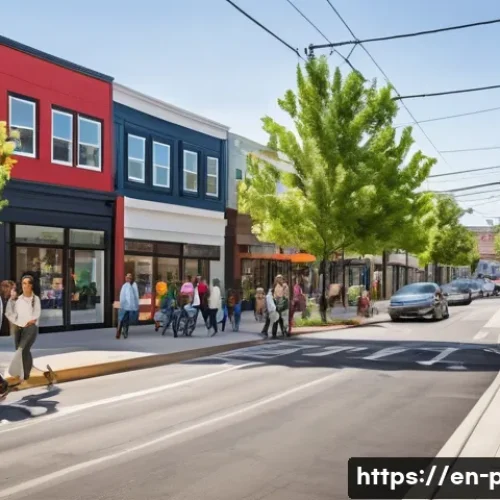
There’s something truly magical about a bustling main street, and I’ve watched firsthand as thoughtful policy has transformed sleepy, rundown areas into vibrant hubs of activity. The key, in my observation, often lies in “place-based” policies – strategies tailored to the unique characteristics and needs of a specific area. This isn’t a one-size-fits-all approach; what works for a historic downtown might not work for a newer commercial strip. I remember a small town that leveraged state grants to create pedestrian-friendly zones, added attractive street furniture, and organized regular farmers’ markets. These seemingly small changes, guided by local policy, encouraged people to linger, to walk, and to rediscover their main street. It wasn’t just about commerce; it was about creating a sense of place, a public living room where people felt connected. Other effective policies I’ve observed include zoning changes that encourage mixed-use development, allowing residential spaces above retail, which brings life to the street even after business hours. It’s also about fostering unique events and cultural programming that draw people in. When policy makers view main streets not just as commercial arteries but as the heart of a community, and design policies that reflect that holistic vision, the economic and social returns can be truly exponential, creating spaces where people genuinely want to live, work, and play.

Innovation in Governance: AI, DAOs, and the Citizen’s Role

The pace of technological change is dizzying, and it’s finally starting to permeate the traditionally slower-moving world of public governance. For years, I’ve imagined a future where technology doesn’t just digitize old processes, but fundamentally transforms how we govern. Now, with advancements in artificial intelligence and blockchain-based decentralized autonomous organizations (DAOs), that future feels far less distant. I’m filled with a mix of excitement and trepidation when I consider these shifts. On one hand, AI promises to help us make data-driven decisions with unprecedented precision, predicting the social impact of new policies before they’re even implemented. On the other, DAOs offer a vision of truly decentralized power, where communities directly fund and manage public services without traditional intermediaries. It’s a thrilling prospect, but it also means we, as citizens, need to be more informed, more engaged, and more capable of critical thought than ever before. We’re moving beyond simple e-governance to potentially entirely new paradigms of collective decision-making.

1. AI as a Policy Enabler: Data-Driven Decisions and Predictive Insights

I remember discussing with a city planner how challenging it was to predict the long-term impact of a new urban development. Would it exacerbate traffic? Would local schools become overcrowded? Traditional methods often rely on educated guesses and historical data, which can be imperfect. This is where AI truly excites me. I’ve seen prototypes of AI models that can analyze vast datasets—from traffic patterns and demographic shifts to environmental indicators—to forecast the ripple effects of proposed policies. Imagine using AI to simulate the impact of a new transit line on neighborhood gentrification, or the effect of a climate resilience strategy on property values years down the line. It moves us beyond reactive governance to proactive, evidence-based policy making. Of course, this isn’t without its caveats. The quality of the AI’s insights is entirely dependent on the data it’s fed, and I always urge caution against blindly trusting algorithms without human oversight. There’s a crucial ethical dimension here: ensuring fairness, transparency, and preventing algorithmic bias. My hope is that AI becomes a powerful tool in the hands of informed policy makers, augmenting their capacity to serve the public good, rather than replacing human judgment or values.

2. Decentralized Autonomous Organizations (DAOs): A New Model for Community Funding

The concept of Decentralized Autonomous Organizations, or DAOs, still feels a bit like science fiction to many, but having explored some of the early community-based DAOs, I’m convinced they represent a fascinating evolution in local governance. At their core, DAOs use blockchain technology to create transparent, democratic organizations where decisions are made by token holders (community members) through voting, and rules are enforced by code. Imagine a local park renovation funded and managed not by the city council, but by a DAO where residents contribute funds and vote directly on design choices, maintenance budgets, and even who gets hired for the work. I’ve seen smaller-scale versions of this, where neighborhood groups pool resources for specific projects, and every expenditure and decision is recorded immutably on a blockchain, ensuring complete transparency and accountability. The appeal for me lies in the potential for unprecedented levels of direct citizen control over public funds and services. However, the scalability, legal frameworks, and equitable participation remain significant challenges. It’s a radical departure from traditional governance, and while it holds immense promise for empowering local communities, it will require careful navigation and robust discussions about what true decentralization means for public services.

Here’s a quick overview of how traditional and innovative governance approaches stack up:

Feature Traditional Governance Innovative/Digital Governance (e.g., AI/DAOs)
Decision Making Representative democracy (elected officials), bureaucratic processes. Data-driven insights (AI), direct democratic voting (DAOs), decentralized consensus.
Transparency Public records, open meetings, but often opaque processes. Algorithmic explanations (AI), blockchain immutability (DAOs), real-time data access.
Citizen Engagement Public hearings, petitions, voting every few years, limited direct input. Continuous feedback channels, online participation, direct funding/management (DAOs).
Resource Allocation Centralized budget allocation, subject to political priorities. AI-optimized resource distribution, community-controlled funding (DAOs).
Challenges Bureaucracy, slow adaptation, potential for corruption, voter apathy. Digital divide, algorithmic bias, regulatory uncertainty, scalability issues, security risks.

Building Bridges: Collaborative Approaches to Community Development

I’ve come to realize that true, lasting community development rarely happens in isolation. It’s not just the government acting alone, nor is it purely the private sector. The most successful initiatives I’ve witnessed are those where diverse stakeholders – local government, businesses, non-profits, and most importantly, residents – genuinely collaborate. This isn’t always easy; getting disparate groups with different agendas to sit at the same table, let alone agree on a common vision, can feel like herding cats. I’ve personally facilitated workshops where initial interactions were filled with skepticism and even animosity. But seeing those barriers break down, watching people with opposing viewpoints find common ground and work towards a shared goal for their neighborhood, is incredibly rewarding. It underscores a fundamental truth: the strength of a community lies in its collective will and the capacity for its members to genuinely connect and build something together. Policies that encourage and enable this kind of cross-sector collaboration are, in my opinion, the most impactful.

1. The Power of Public-Private Partnerships in Urban Renewal

When I think about transformative urban renewal projects, my mind immediately goes to examples where the public and private sectors teamed up. It’s often the blend of government’s long-term vision and regulatory power with private enterprise’s capital, innovation, and efficiency that truly gets things done. I recall a struggling waterfront area in a mid-sized city that was an eyesore, a remnant of its industrial past. The city government had a vision for a public park and mixed-use development, but lacked the funds and expertise. A partnership was forged with a private developer who brought in the financial muscle and construction know-how, but critically, the city ensured that public access to the waterfront was guaranteed and that a portion of the housing was affordable. It wasn’t just about constructing buildings; it was about creating a new public realm. My personal observation is that these partnerships thrive when there’s clear communication, shared risk, and a mutual understanding of public benefit versus private profit. When done right, they can unlock resources and accelerate development in ways that neither sector could achieve on its own, leading to truly remarkable transformations that benefit everyone, from new job creation to enhanced recreational spaces.

2. Resident-Led Initiatives: Empowering Grassroots Change

While top-down policies and large partnerships are vital, I have an immense appreciation for the power of grassroots, resident-led initiatives. My favorite stories are always those where a small group of passionate neighbors, often frustrated by inaction, took matters into their own hands and sparked a profound change. I remember a particularly inspiring instance where residents, fed up with a neglected vacant lot that had become a dumping ground, organized themselves. They approached the city for permission, learned about urban gardening, and transformed it into a vibrant community garden that not only produced fresh food but also became a social hub. The city’s role, in this case, was not to dictate, but to enable – providing permits, maybe some initial funding, and technical assistance. This kind of “bottom-up” development is incredibly powerful because it builds on local knowledge, addresses immediate needs, and fosters deep community ownership. It’s about empowering people to be the agents of change in their own neighborhoods, rather than passive recipients of externally imposed plans. Policies that simplify the process for community groups to acquire land, access resources, or apply for small grants can unleash an incredible amount of latent energy and creativity within a community, truly building bridges from the ground up.

Empowering the Everyday Citizen: From Bystander to Changemaker

For too long, the narrative around public policy and community development has been dominated by experts, politicians, and developers. But if there’s one thing I’ve learned through my journey, it’s that the most profound and sustainable changes often begin with the everyday citizen – with you, and with me. We are not merely passive residents subject to the whims of faraway decision-makers; we are the very fabric of our communities, and our voices, our experiences, and our engagement are absolutely essential. I’ve personally seen individuals, initially feeling powerless, transform into formidable advocates for their neighborhoods, pushing for everything from better park maintenance to fairer housing policies. This shift from bystander to changemaker isn’t always easy; it requires courage, persistence, and often, learning a new language of civic engagement. But the potential rewards – a more responsive government, a more vibrant community, and a deeper sense of belonging – are immeasurable. It’s about reclaiming our role in shaping the world we live in, one policy, one initiative at a time. It’s time to realize that our participation isn’t just a right, but a responsibility, and truly, the most powerful lever for change.

1. Decoding Policy Jargon: Making Government Accessible to All

One of the biggest frustrations I’ve encountered when trying to encourage civic engagement is the impenetrable language of government. Policy documents are often dense, filled with acronyms, and written in a way that seems designed to deter public understanding. How can citizens effectively participate in decision-making when they can’t even understand the proposals? I’ve made it a personal mission to help bridge this gap, often by translating complex policy into plain language during community meetings or online discussions. I remember one particular zoning ordinance that was so convoluted, even experienced community leaders struggled to interpret its implications. It’s not just about simplifying words; it’s about breaking down concepts, explaining the “why” behind a policy, and illustrating its real-world impact with concrete examples. Progressive local governments are now adopting “plain language” policies, publishing summaries of complex legislation, and even using infographics and videos to explain key initiatives. This isn’t just about transparency; it’s about empowerment. When people understand what’s being proposed, they can offer more informed feedback, ask better questions, and ultimately, hold their elected officials more accountable. It’s a fundamental step towards true democratic participation, fostering an environment where everyone feels capable of contributing their perspective.

2. Collective Action: How United Voices Drive Policy Change

Individually, our voices can sometimes feel small against the machinery of government. But collectively, they become an unstoppable force. I’ve been part of numerous grassroots campaigns where a seemingly impossible policy change was achieved through sheer collective will. Think about a neighborhood uniting to prevent the closure of a beloved public library, or residents organizing to demand better environmental protections against a polluting industry. These successes rarely happen overnight; they are the result of tireless organizing, strategic communication, and sustained pressure. I’ve seen community groups master the art of effective advocacy: attending every public meeting, writing letters, making phone calls, and, crucially, building alliances with diverse stakeholders. It’s about identifying a common goal, mobilizing people around it, and then relentlessly presenting a united front. The impact can be truly profound: I recall a local park preservation effort where hundreds of residents, from all walks of life, showed up at a city council meeting, each sharing a personal story about what the park meant to them. That collective outpouring of emotion and reasoned argument swayed the council, demonstrating the immense power of united voices. This isn’t just theoretical; it’s about real people coming together, using their combined strength to influence decisions that directly affect their quality of life, proving that sometimes, the biggest changes start with the simplest act of showing up and speaking out together.

Concluding Thoughts

As I reflect on the myriad ways local policy weaves through the tapestry of our daily lives, from the cost of our homes to the quality of our air, one truth becomes abundantly clear: we are not just observers in this grand experiment of governance. We are active participants, crucial co-creators of the communities we inhabit. My journey has shown me that the most impactful changes often don’t begin in grand halls of power, but in the small, persistent actions of engaged citizens. It’s about understanding the nuances, leveraging new technologies, and most importantly, collaborating across divides. So, let’s shed the notion that policy is solely for the experts; it’s a living, breathing force that we, the everyday residents, have the power to shape, for a future that is truly reflective of our collective aspirations.

Helpful Resources & Next Steps

1. Attend Local Meetings (Online or In-Person): Most city councils, planning commissions, and school boards hold public meetings, often streamed online. Check your local government’s official website for schedules and agendas. This is where decisions are made, and your presence, even just to listen, is a powerful act of engagement.

2. Explore Your Local Government Website: These sites are treasure troves of information, from proposed ordinances and budget documents to contact information for your elected officials and departmental staff. Many now offer user-friendly dashboards and ways to track projects.

3. Connect with Community Groups: Non-profits, neighborhood associations, and advocacy groups are often at the forefront of local policy discussions. Joining one can provide invaluable insights, opportunities for collective action, and a network of like-minded individuals. They’re often the best source of ‘boots on the ground’ information.

4. Master the Art of Public Comment: Whether it’s submitting a written comment, emailing your councilor, or speaking at a public hearing, concise, personal, and well-reasoned feedback can genuinely influence policy. Share your personal experiences and how a proposed policy would affect you or your neighbors – it makes an impact.

5. Vote in Every Election (Local Matters Most!): While national elections grab headlines, local elections often have a more direct and immediate impact on your daily life. Research candidates, understand their positions on local issues, and cast your ballot. Your vote empowers the people who make these critical local policy decisions.

Key Takeaways

Local policy is the invisible hand shaping our daily lives, from housing and transit to climate resilience and economic opportunity. Active citizen engagement is not just a right, but a vital responsibility, essential for fostering equitable, thriving communities. By decoding jargon, embracing collective action, and leveraging innovation, we can transform from bystanders into powerful changemakers, ensuring our communities reflect our shared values and aspirations.

Frequently Asked Questions (FAQ) 📖

Q: Given your emphasis on the “delicate balance” of public policy, what’s the biggest challenge you’ve personally observed in trying to implement positive change without unintended negative consequences, like gentrification?

A: Oh, the biggest challenge? It’s that delicate dance between genuine improvement and accidentally pushing people out. I’ve seen it firsthand, like when a well-meaning zoning change designed to revitalize a struggling main street ends up, quite unintentionally, pricing out the very mom-and-pop shops and long-time residents it was supposed to help.
It’s heartbreaking, really, to see a community’s fabric fray because of a policy that, on paper, looked perfect. It’s never as simple as “just fix the roads” or “build new apartments.” It’s about people’s lives, their history, their sense of belonging.
The ripple effect is huge, and predicting it is incredibly difficult, often leading to deep divides in town meetings.

Q: You mentioned digital citizen engagement platforms and

A: I. While exciting, what are your main concerns about technology’s role in public policy and community development, especially regarding inclusivity? A2: My biggest worry, honestly, is that while these digital platforms promise incredible transparency and ease of access, they can inadvertently create a whole new set of barriers.
Think about it: not everyone has reliable internet, or even a smartphone, let alone the tech literacy to navigate complex online forums for public comment.
I’ve been in community meetings where folks, usually older residents or those with fewer resources, just feel completely shut out because the “official” conversation has moved online.
It’s like, we gain efficiency, but we risk losing invaluable perspectives from people who’ve lived in these neighborhoods for decades. The promise of technology is huge, but we absolutely have to design these systems with digital equity at their core, or we just widen the divide.

Q: With these transformative changes on the horizon, from

A: I to DAOs, how do you see the role of the average citizen evolving, and what’s the most important thing they can do to prepare for this future? A3: The future isn’t something that just happens to us; it’s something we make.
With AI potentially predicting policy impacts and DAOs giving communities direct control, the average citizen’s role isn’t just about voting every few years anymore.
It’s about being actively, continuously engaged. The most important thing? Get informed, and then get involved.
It might sound cliché, but really understand what’s happening in your local planning meetings, read up on the proposed changes, and speak up. Your voice, especially when backed by a bit of understanding, has real power.
Don’t wait for permission; organize, discuss, even just talk to your neighbors. Because when we talk about “the community,” we are the community. It’s about owning that responsibility and shaping our shared future, not just passively consuming it.
It’s never been more vital to be an active participant.